Black horizontal rounded line on a white background
COMMERCIAL ASPHALT & PARKING LOT PAVING
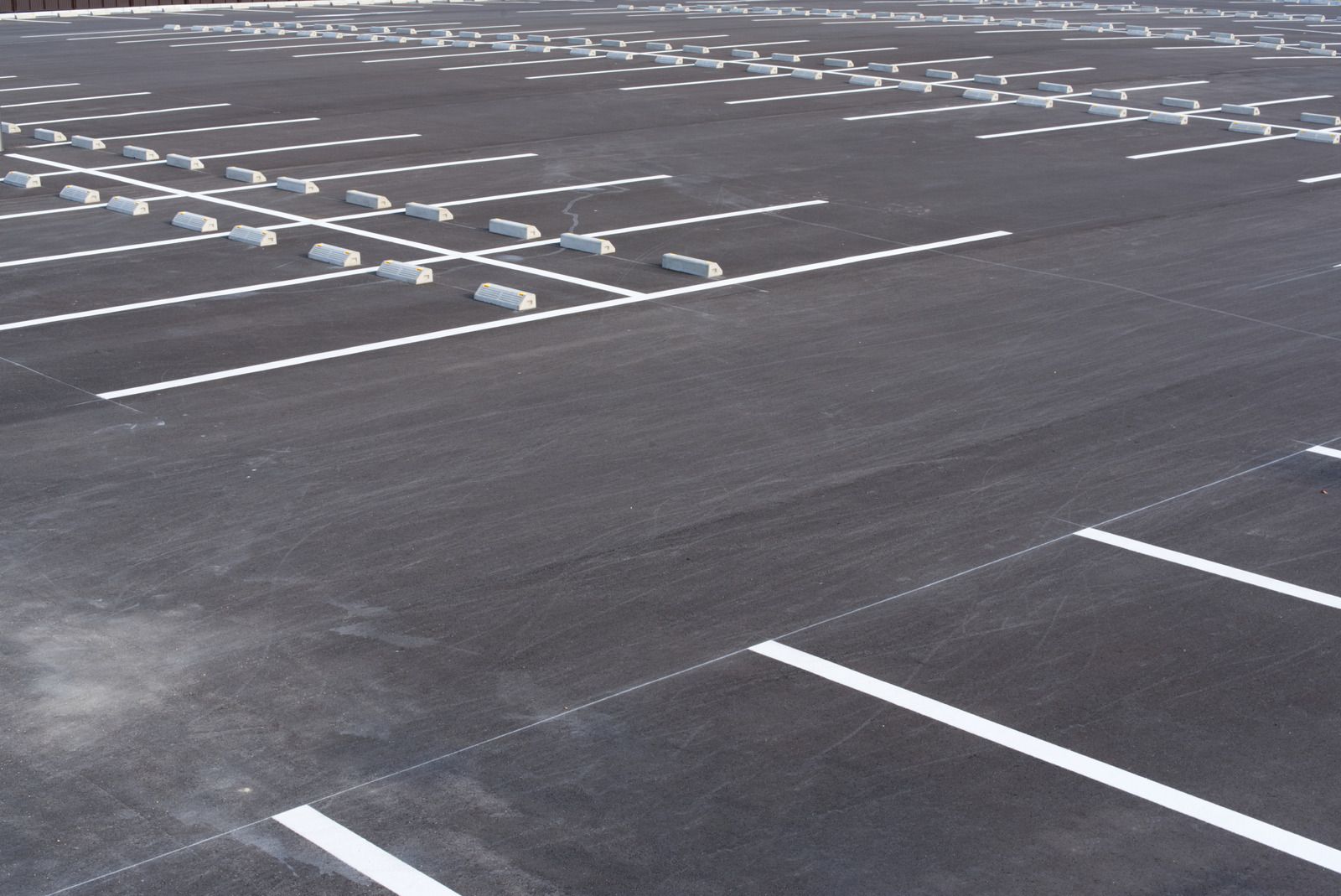
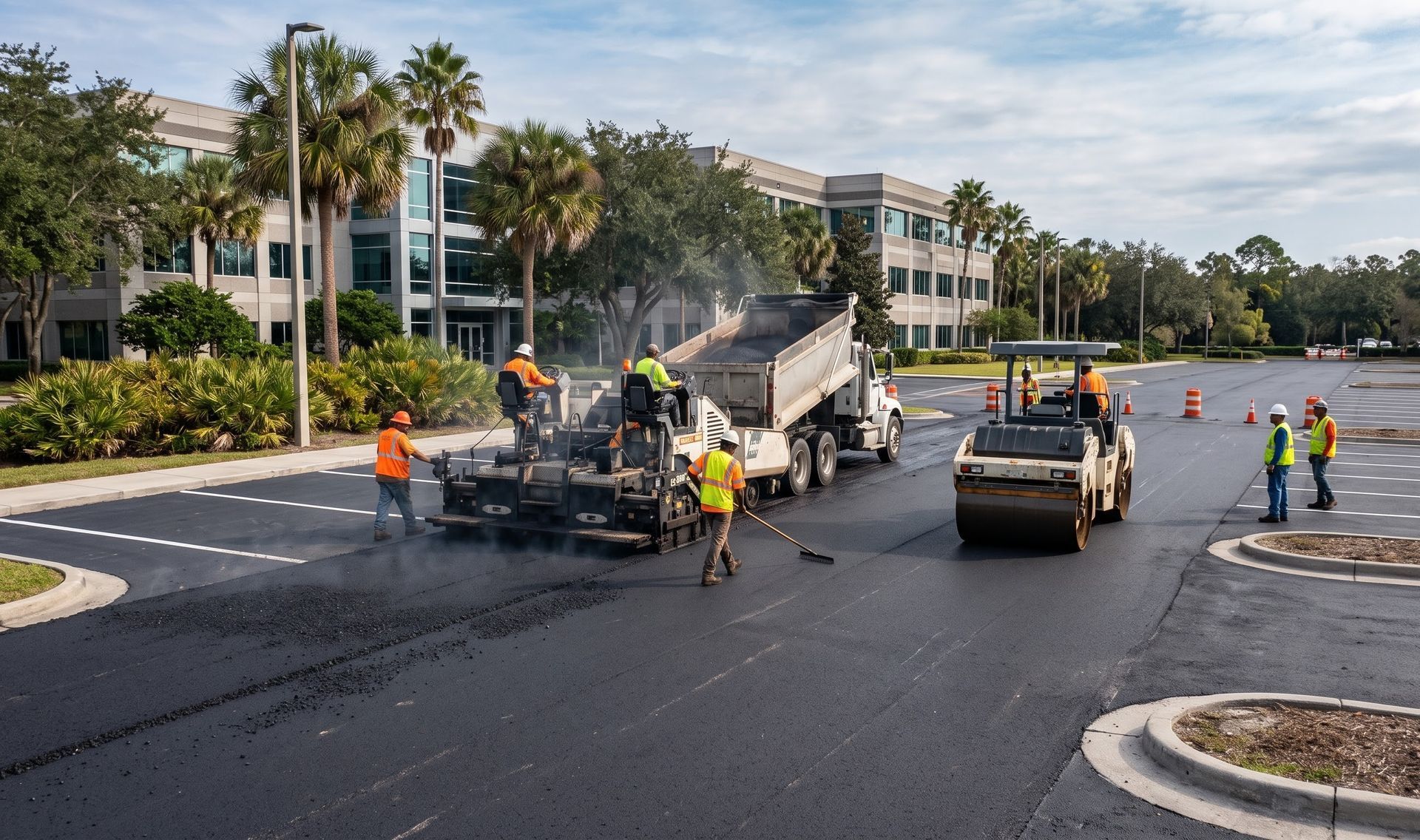
Florida Statute 553.5041 sets accessible parking stalls at 12 feet wide with a 5-foot access aisle, so a lot's layout matters as much as its asphalt. Richard Cooper's All Around Asphalt provides commercial asphalt and parking lot paving in Jacksonville, Florida for retail plazas, offices, churches, apartment communities, and warehouses. We build new lots, rebuild failing ones, and pave access drives and loading zones, drawing on 16+ years of paving, grading, and drainage work across residential and commercial sites.
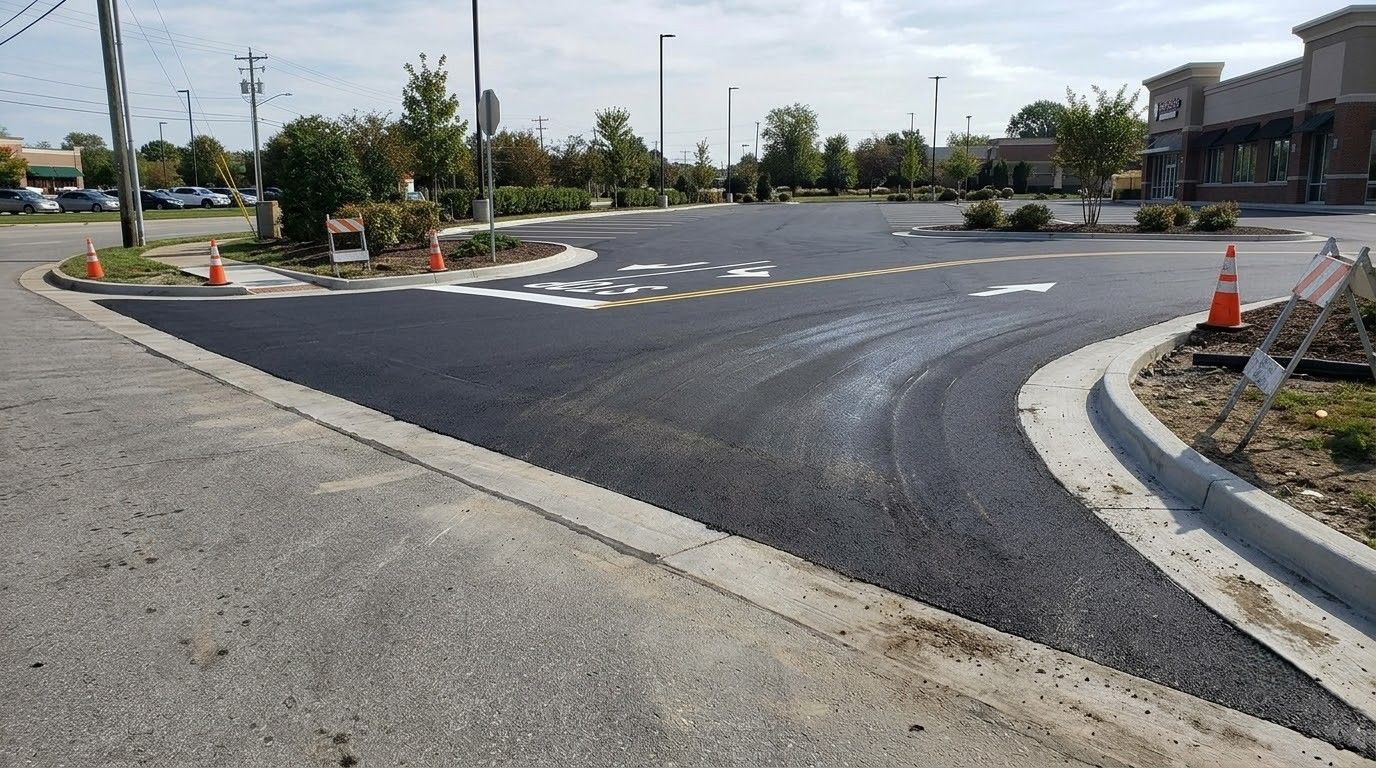
Construction workers pouring concrete at a building site, with a truck in the background
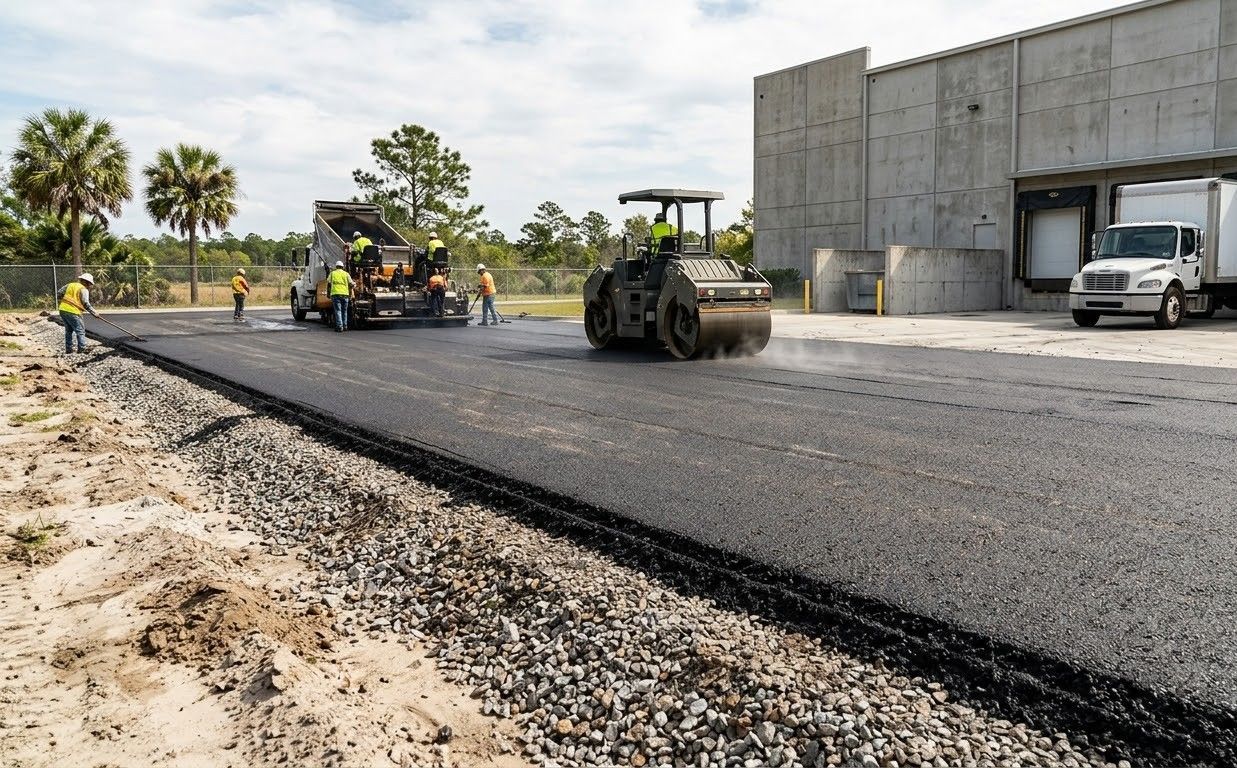
Wet concrete pouring from a truck chute onto a construction site, forming a gravelly slab surface

YOUR PARKING LOT GREETS CUSTOMERS BEFORE YOU DO.

Long before anyone reaches your door, they have judged the property by its pavement. Potholes, faded surfaces, and puddled entrances suggest neglect, even when everything inside runs well. We rebuild lots with proper base depth, smooth drive lanes, and slopes that carry rain to inlets, so the first impression matches the business you have built.

A well-built lot also lowers liability, cuts patching costs, and keeps tenants, shoppers, and delivery drivers moving without frustration all year. And it signals to prospective tenants that the property is managed with care.

  • New lots and full-depth rebuilds
  • Layouts planned around accessible stalls
  • Phased work for open businesses
  • Grading for inlets and retention areas
Black horizontal line on a white background
COMMERCIAL PARKING LOT PAVING

PAVEMENT THAT HANDLES DELIVERY TRUCKS AND DAILY CROWDS.

Commercial pavement carries far more than passenger cars. Garbage trucks, box trucks, and service vans concentrate heavy loads at entrances, dumpster pads, and loading docks, which is exactly where weak lots fail first. We thicken the base and asphalt in those areas, match drive lanes to how traffic actually flows, and build entrances that meet the street smoothly, so your lot keeps working through peak hours and heavy deliveries.

PARKING LOTS BUILT FOR JACKSONVILLE BUSINESSES.

Northeast Florida lots face sandy soil, heavy summer rain, and stormwater rules that kick in quickly on larger projects. We plan grades around inlets, swales, and retention areas, and we flag permitting needs early so they do not stall your schedule. From a small office lot in Orange Park to a busy retail plaza, every layout is drawn around the way customers arrive and park.

PROPERTY MANAGERS CALL US BACK FOR A REASON.

Managers juggle tenants, budgets, and deadlines, so they remember contractors who make the job easy. Across 16 years in the trade, we have learned to show up when promised, keep work zones organized, and communicate before small issues become complaints. We sequence larger lots so storefronts stay reachable and finish each section before moving on. Ready to talk through a plan that fits your property and your tenants?

WHAT A NEW PARKING LOT DELIVERS.

Black icon of a snowplow or road grader clearing a snowy road
Stronger First Impressions
A dark, level, well-drained lot tells visitors the property is cared for, while cracked and patched pavement quietly suggests neglect may continue inside the building, the stores, or the offices.
Black construction vehicle icon with a striped front blade and cabin
Safer Traffic Flow
Thoughtful layouts separate pedestrians from moving vehicles and give drivers room to turn, reducing fender benders and confusion during your busiest hours, from weekday lunch rushes to busy holiday weekends.
Black-and-white icon of a car with a red warning light and front obstacle sensor
Fewer Trip and Fall Hazards
Replacing potholes and heaved edges with a flat, continuous surface removes the uneven spots behind many slip and trip claims on commercial properties, while making accessible routes easier for every visitor.
Black-and-white icon of a construction vehicle with a striped front blade/roller
Lower Long-Term Maintenance
Pavement built on a solid base needs far less patching, turning sealcoating and crack repair into predictable budget items instead of surprise emergency spending that drains reserves year after year.
Black utility vehicle or forklift icon with a striped front bumper on a white background
Better Stormwater Handling
Proper slopes move rain toward inlets and retention areas instead of leaving puddles at entrances, keeping customers drier and the base beneath stable through even the heaviest summer storms.
Black train icon with a front-facing engine and striped tracks or barrier below
Higher Property Value
Buyers, lenders, and prospective tenants inspect pavement early, and a sound, compliant lot supports stronger appraisals, lease rates, and smoother sale or refinancing negotiations whenever the property changes hands.
Black horizontal rounded line on a white background

our services

OUR COMMERCIAL PARKING LOT WORK
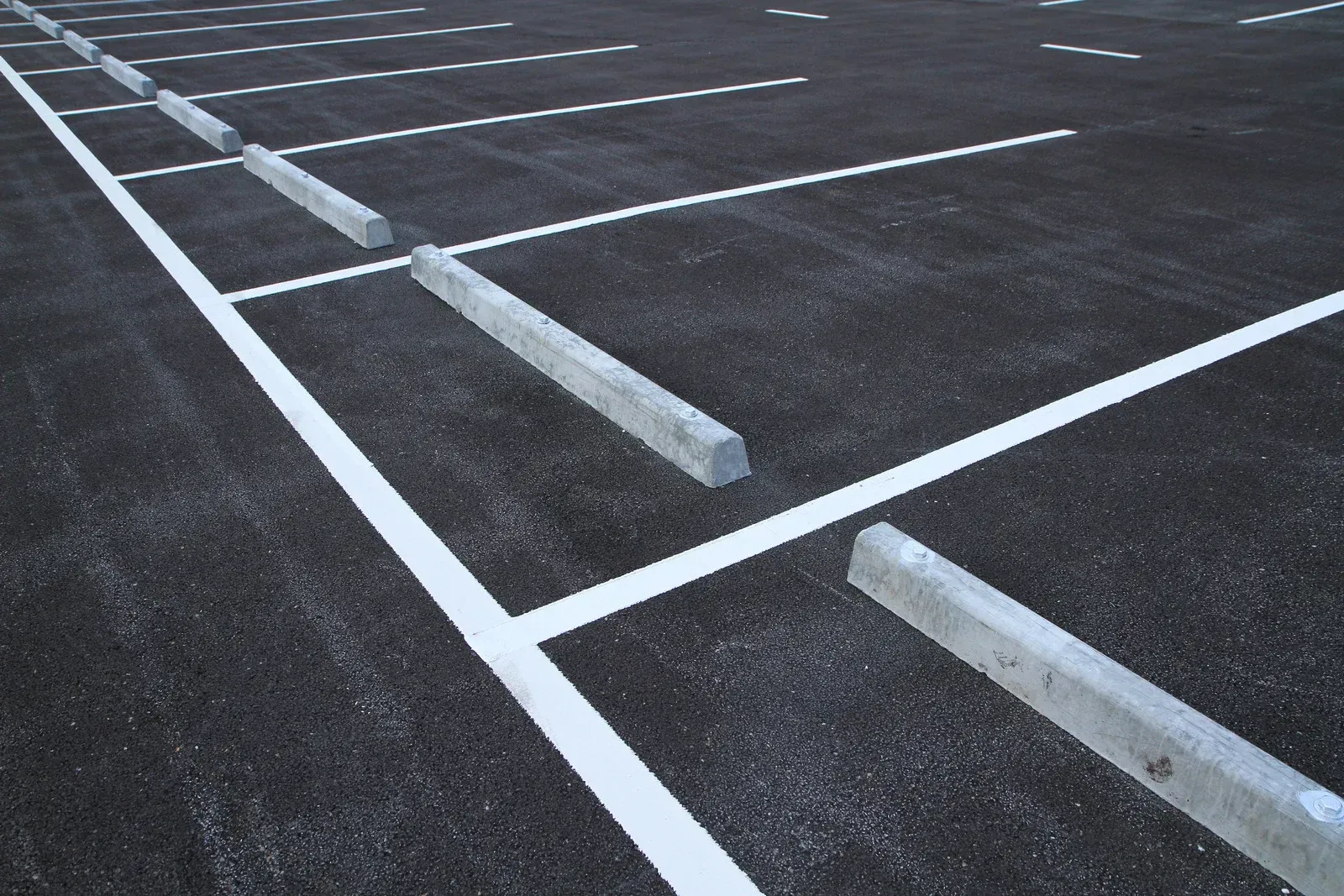
Commercial properties need different solutions depending on age, traffic, and budget. These are the parking lot and commercial asphalt services our crew provides for owners and managers across Northeast Florida's growing communities.
Template premium 99
FRESH START

New Parking Lot Construction


Raw land becomes a working lot through careful sequencing. We clear and grade the site, install a deep compacted base, set slopes toward inlets, and lay asphalt sized for expected traffic.
Template premium 99
FULL REBUILD

Full-Depth Lot Reconstruction


When widespread cracking shows the base has failed, surface fixes stop helping. We remove old pavement and saturated material, rebuild the foundation, and pave a new structure designed for years of steady traffic.
Template premium 99
NEW SURFACE

Commercial Asphalt Overlays


A lot with a sound base but a worn surface can often take a new layer instead of full removal. After crack repair and milling at curbs, fresh hot mix restores a uniform surface.
Template premium 99
TRAFFIC ROUTES

Access Roads & Drive Lanes


Entrances and drive lanes take concentrated turning and braking forces. We build these routes thicker than stalls and match grades to streets and curbs so vehicles enter without jolts or scraped bumpers.
Template premium 99
HEAVY LOADS

Loading Zones & Heavy-Duty Areas


Dumpster pads, truck docks, and delivery bays carry loads that crush standard pavement. These sections get a stronger base and added asphalt depth that resists rutting and breakup under daily truck traffic.
Template premium 99
STAY OPEN

Phased Paving for Open Businesses


Closing a whole lot costs revenue. We divide work into sections, agree on a sequence with management, and route traffic around active areas so storefronts and entrances stay reachable throughout the project.
Black horizontal line on a white background

THE WORD ON OUR WORK

WHAT OUR CLIENTS SAY.

Business owners and property managers tell us they appreciate a crew that respects their customers. Lots stay accessible, communication stays steady, and the finished pavement looks sharp on day one. See what commercial clients say about working with our team on lots of every size.

How soon can a new parking lot reopen to traffic?

Passenger cars can typically return within 24 to 48 hours, depending on temperature and mix depth. Heavy trucks should wait longer, and striping or sealcoating has its own drying window.

Does a new parking lot in Florida need a stormwater permit?

Often, yes. Florida rules generally require an Environmental Resource Permit when a project adds more than 4,000 square feet of impervious surface used by vehicles, and local codes may add requirements.

How many accessible spaces does a parking lot need?

Federal standards start at one accessible space for 1 to 25 total spaces and two for 26 to 50. At least one of every six accessible spaces must also be van accessible.

What causes alligator cracking in a parking lot?

That interconnected pattern signals structural fatigue, usually from a weak or saturated base under repeated heavy loads. The affected area typically needs excavation and base repair, not a surface patch.

How thick should commercial asphalt pavement be?

Commercial lots usually need more asphalt and a deeper base than driveways, with heavier sections at entrances and truck routes. Final thickness depends on soil, expected loads, and daily heavy traffic.

Can a parking lot be paved in sections while my business stays open in Jacksonville, Florida?

Yes, Richard Cooper's All Around Asphalt divides Jacksonville, Florida lots into workable zones, posts clear detours, and completes each section before moving on, so customers can still reach your entrance.

How should a lot be laid out for delivery trucks?

Trucks need wide turning paths, a direct route to the dock or dumpster pad, and room to maneuver without crossing parking rows. Reinforced lanes protect lighter stall areas from rutting.

Why choose Richard Cooper's All Around Asphalt for a commercial lot in Jacksonville, Florida?

Richard Cooper's All Around Asphalt plans every Jacksonville, Florida lot around real traffic, drainage, and accessibility needs, then builds it with our own crew. Managers get steady communication and minimal disruption.

Black horizontal rounded line on a white background

Common Questions

FREQUENTLY ASKED QUESTIONS.

Commercial paving involves permits, accessibility rules, and scheduling around customers. These answers address what owners and managers usually want to know before we begin planning their parking lot.

How soon can a new parking lot reopen to traffic?

Passenger cars can typically return within 24 to 48 hours, depending on temperature and mix depth. Heavy trucks should wait longer, and striping or sealcoating has its own drying window.

Does a new parking lot in Florida need a stormwater permit?

Often, yes. Florida rules generally require an Environmental Resource Permit when a project adds more than 4,000 square feet of impervious surface used by vehicles, and local codes may add requirements.

How many accessible spaces does a parking lot need?

Federal standards start at one accessible space for 1 to 25 total spaces and two for 26 to 50. At least one of every six accessible spaces must also be van accessible.

What causes alligator cracking in a parking lot?

That interconnected pattern signals structural fatigue, usually from a weak or saturated base under repeated heavy loads. The affected area typically needs excavation and base repair, not a surface patch.

How thick should commercial asphalt pavement be?

Commercial lots usually need more asphalt and a deeper base than driveways, with heavier sections at entrances and truck routes. Final thickness depends on soil, expected loads, and daily heavy traffic.

Can a parking lot be paved in sections while my business stays open in Jacksonville, Florida?

Yes, Richard Cooper's All Around Asphalt divides Jacksonville, Florida lots into workable zones, posts clear detours, and completes each section before moving on, so customers can still reach your entrance.

How should a lot be laid out for delivery trucks?

Trucks need wide turning paths, a direct route to the dock or dumpster pad, and room to maneuver without crossing parking rows. Reinforced lanes protect lighter stall areas from rutting.

Why choose Richard Cooper's All Around Asphalt for a commercial lot in Jacksonville, Florida?

Richard Cooper's All Around Asphalt plans every Jacksonville, Florida lot around real traffic, drainage, and accessibility needs, then builds it with our own crew. Managers get steady communication and minimal disruption.

    Black horizontal rounded line on a white background
    HOW WE WORK

    FROM WORN LOT TO OPEN FOR BUSINESS, HERE IS HOW.

    STEP 01

    Assess Traffic and Drainage
    We walk the property with you, noting where vehicles enter, where trucks load, and where water collects after storms. That review shapes every recommendation on layout, thickness, drainage, and the overall schedule we propose.

    STEP 02

    Plan Phases and Permits
    Together we set a work sequence that keeps entrances open and flag any stormwater or right-of-way permits early. Tenants and customers get advance notice, so paving days hold no surprises for anyone on the property.

    STEP 03

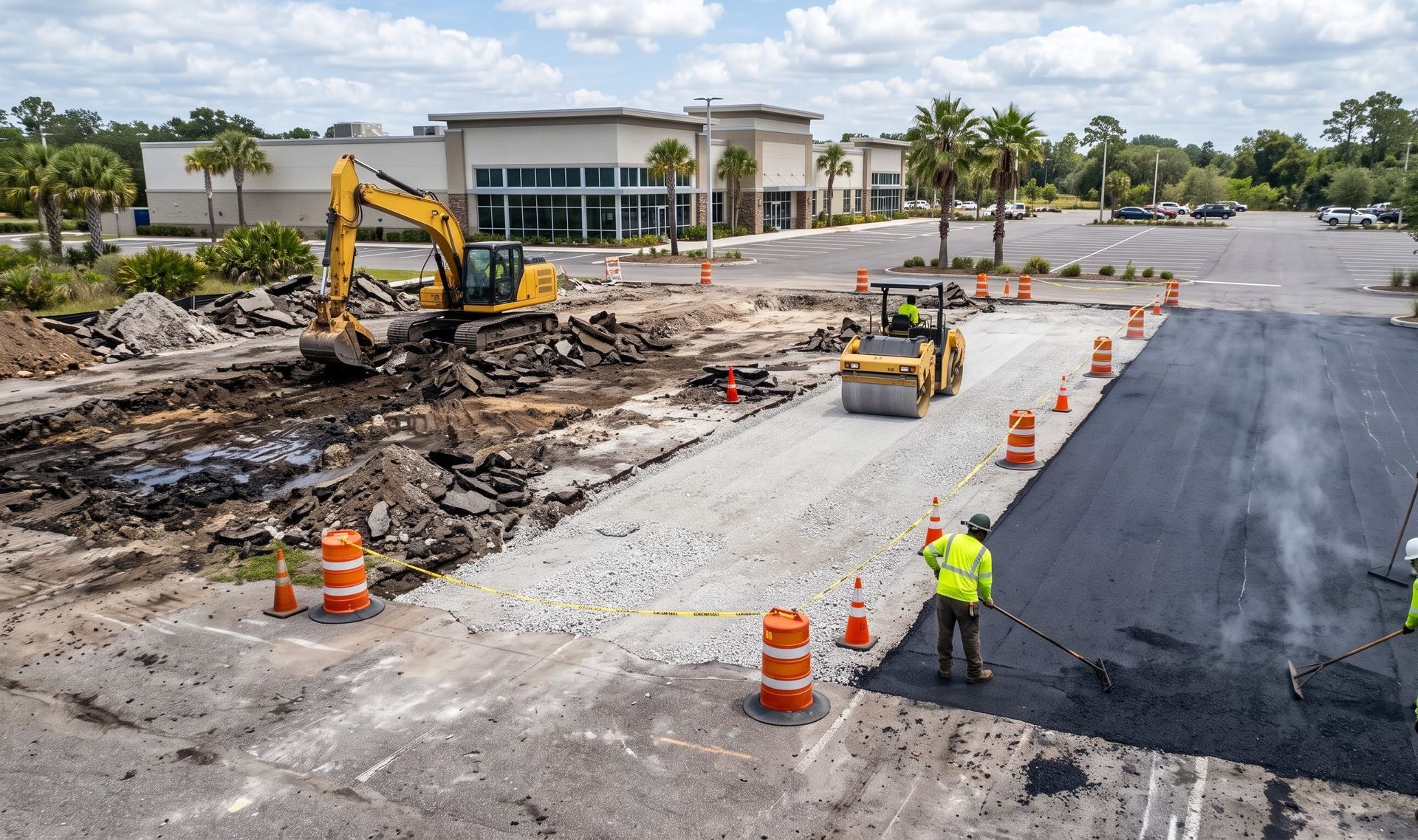
    Remove and Prepare
    Failed pavement and saturated base come out section by section. Our skid steer regrades each area toward inlets or retention, and soft subgrade gets replaced with compacted aggregate before any new base goes down.

    STEP 04

    Strengthen the Foundation
    New base material goes down in compacted lifts, with extra depth at entrances, drive lanes, and dumpster pads. This is the step that decides how long your lot will last under real-world commercial traffic.

    STEP 05

    Pave Each Section
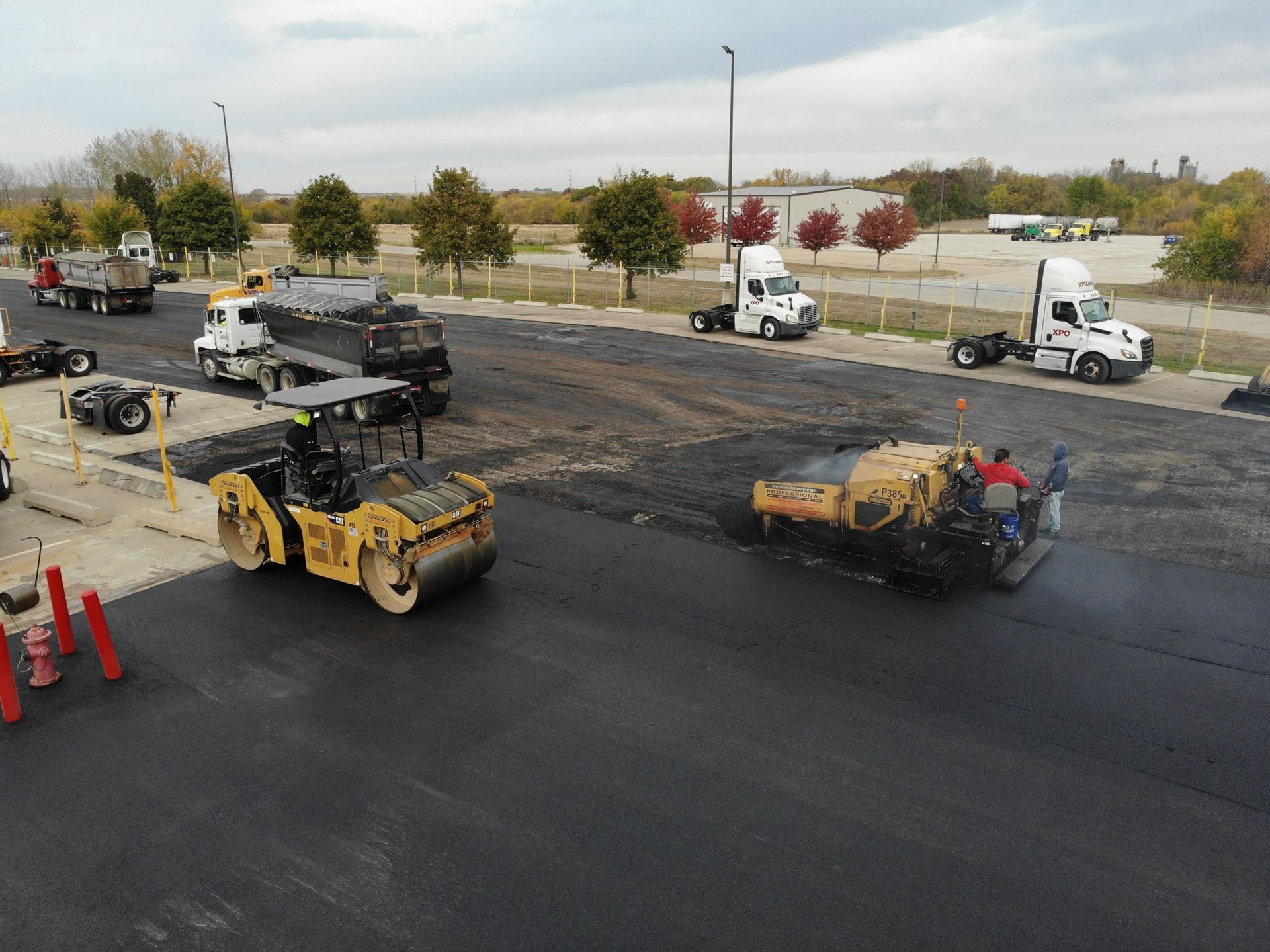
    Hot asphalt is placed and rolled at consistent thickness, with clean joints between phases. Transitions at curbs, sidewalks, and streets are finished smooth so carts and wheelchairs roll across easily without catching an edge.

    STEP 06

    Reopen and Review
    Once each section cures enough for traffic, barriers come down and we walk the finished lot with you. You also receive guidance on sealcoating timing and long-term maintenance to protect your investment for years.