Black horizontal rounded line on a white background
DRAINAGE INSTALLATION & REPAIR
During the wet season, the water table across much of Northeast Florida can rise to within 2 to 8 feet of the surface, leaving sandy yards little room for heavy storms. Richard Cooper's All Around Asphalt provides drainage installation and repair in Jacksonville, Florida, including French drains, catch basins, culvert pipe, swales, and underground line repair for homes and businesses. With 16+ years of grading and drainage work, we design each system around how water actually moves across your land.
Construction workers pouring concrete at a building site, with a truck in the background
Wet concrete pouring from a truck chute onto a construction site, forming a gravelly slab surface

STANDING WATER IS A WARNING, NOT A NUISANCE.

Puddles that linger after an afternoon storm are more than an eyesore. They soften the ground beside foundations, undermine driveway edges, wash out landscaping, and give mosquitoes a place to breed. Sandy soil fills fast when the water table rises, so runoff needs a planned path off the property, not just time to soak in.

A properly designed drainage system protects every other investment on your land, from the slab under your home to the pavement out front. Fixing water problems early also prevents far larger repairs later.

  • French drains and catch basins
  • Culverts and driveway pipe
  • Swale construction and regrading
  • Underground pipe repair
Black horizontal line on a white background
DRAINAGE INSTALLATION & REPAIR

SEND STORMWATER AWAY BEFORE IT FINDS YOUR FOUNDATION.

Effective drainage starts with understanding where water comes from and where it can legally go. We trace runoff from roofs, driveways, and neighboring lots, check elevations across the property, and choose the combination of drains, pipe, and grading that fits. Every trench gets filter fabric to keep sand out and a steady fall for reliable flow, so the system keeps working long after the first storm tests it.

DRAINAGE DESIGNED FOR JACKSONVILLE SAND AND STORMS.

Northeast Florida's sandy soil drains fast until it saturates, and summer storms can overwhelm a yard within minutes. We size systems for those downpours, wrap pipe to stop sand migration, and discharge water to the street, an approved swale, or a retention area rather than a neighbor's lot. From older homes near Orange Park to newer lots in St. Augustine, each design fits the site.

WATER ALWAYS SHOWS US WHERE IT WANTS TO GO.

The best drainage plans start by watching the property after rain. Across 16 years of grading and drainage work, we have learned that water follows the land, not the plan someone drew on paper. So we walk problem areas, measure falls, and locate failures before we dig. That approach is why our systems solve the problem instead of moving it. Ready to see where the water on your property is really going?

WHAT RELIABLE DRAINAGE DELIVERS.

Black icon of a snowplow or road grader clearing a snowy road
Protected Foundations
Moving runoff away from slabs and crawl spaces keeps the surrounding soil drier and more stable, reducing the risk of moisture problems, settlement, and costly structural repairs.
Black construction vehicle icon with a striped front blade and cabin
Drier, Usable Yards
Effective drainage lets lawns recover quickly after storms, so children, pets, and gatherings can use the space again soon after the rain stops instead of days later.
Black-and-white icon of a car with a red warning light and front obstacle sensor
Longer Pavement Life
Directing flow away from driveways and parking lots keeps their base firm, preventing the soft spots and potholes that saturated sand creates along pavement edges over time.
Black-and-white icon of a construction vehicle with a striped front blade/roller
Less Erosion
Capturing concentrated runoff keeps soil in place, protects mulch and plantings, and stops the channels that undermine walkways and slowly carve through landscaped beds after every heavy storm.
Black utility vehicle or forklift icon with a striped front bumper on a white background
Fewer Mosquito Breeding Spots
Eliminating puddles and soggy low areas removes many of the places mosquitoes breed, making evenings outdoors more comfortable through the long warm season, from spring well into fall.
Black train icon with a front-facing engine and striped tracks or barrier below
Stronger Property Value
A property with functioning drainage presents better during a sale and avoids the price reductions that often follow inspection reports of flooding, standing water, or foundation moisture problems.
Black horizontal rounded line on a white background

our services

OUR DRAINAGE WORK

Every property handles water differently, so the right solution may be a single drain or a full system. These are the drainage installation and repair services our crew provides for homes and businesses.
Template premium 99
FRENCH DRAINS

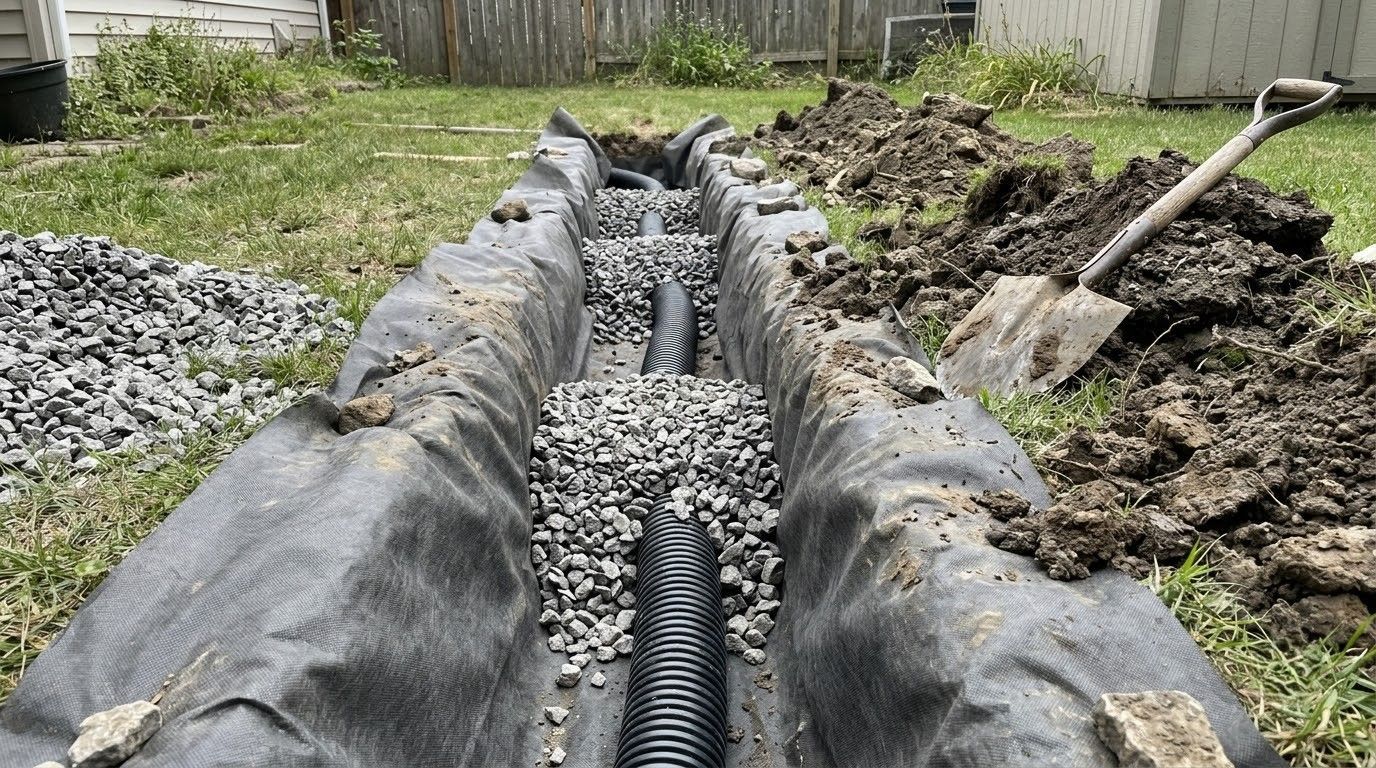
French Drain Installation


A perforated pipe set in a gravel trench collects groundwater and seepage, then carries it to a safe outlet. We line trenches with fabric, set pipe at a steady fall, and backfill carefully.
Template premium 99
SURFACE INLETS

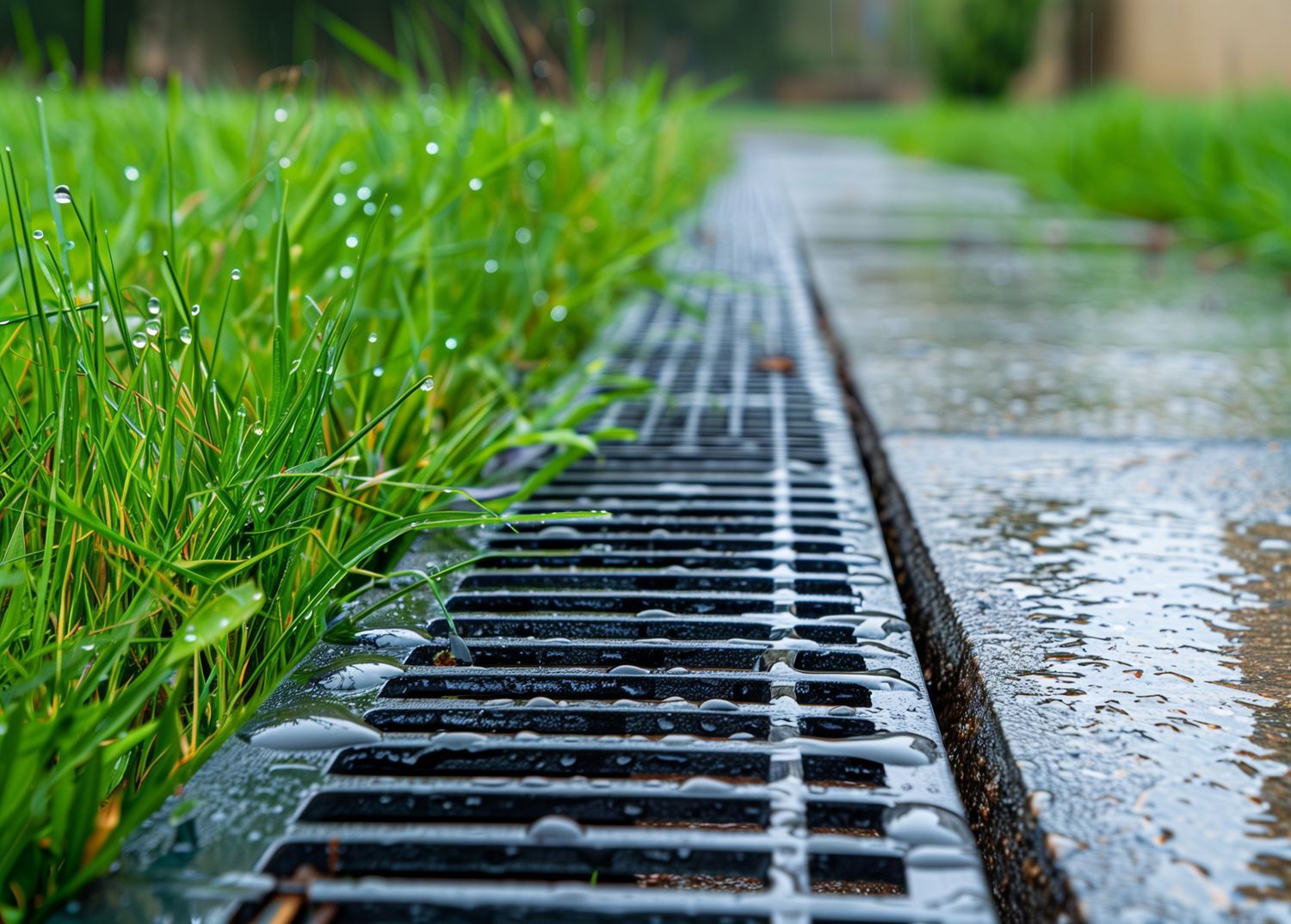
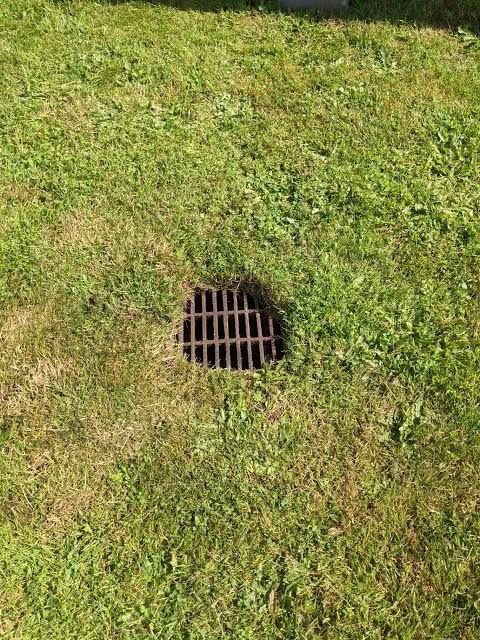
Catch Basins & Yard Drains


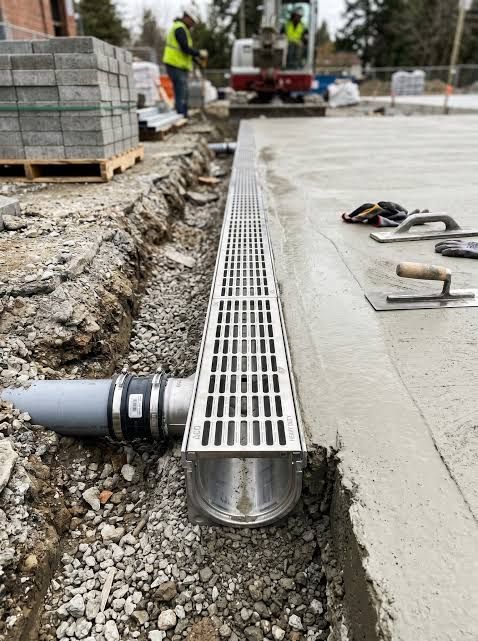
Low spots that collect water need a place for it to go. We install catch basins and grates at those points, connect them to solid pipe, and route flow to an approved discharge point.
Template premium 99
DRIVEWAY CROSSINGS

Culvert & Driveway Pipe Installation


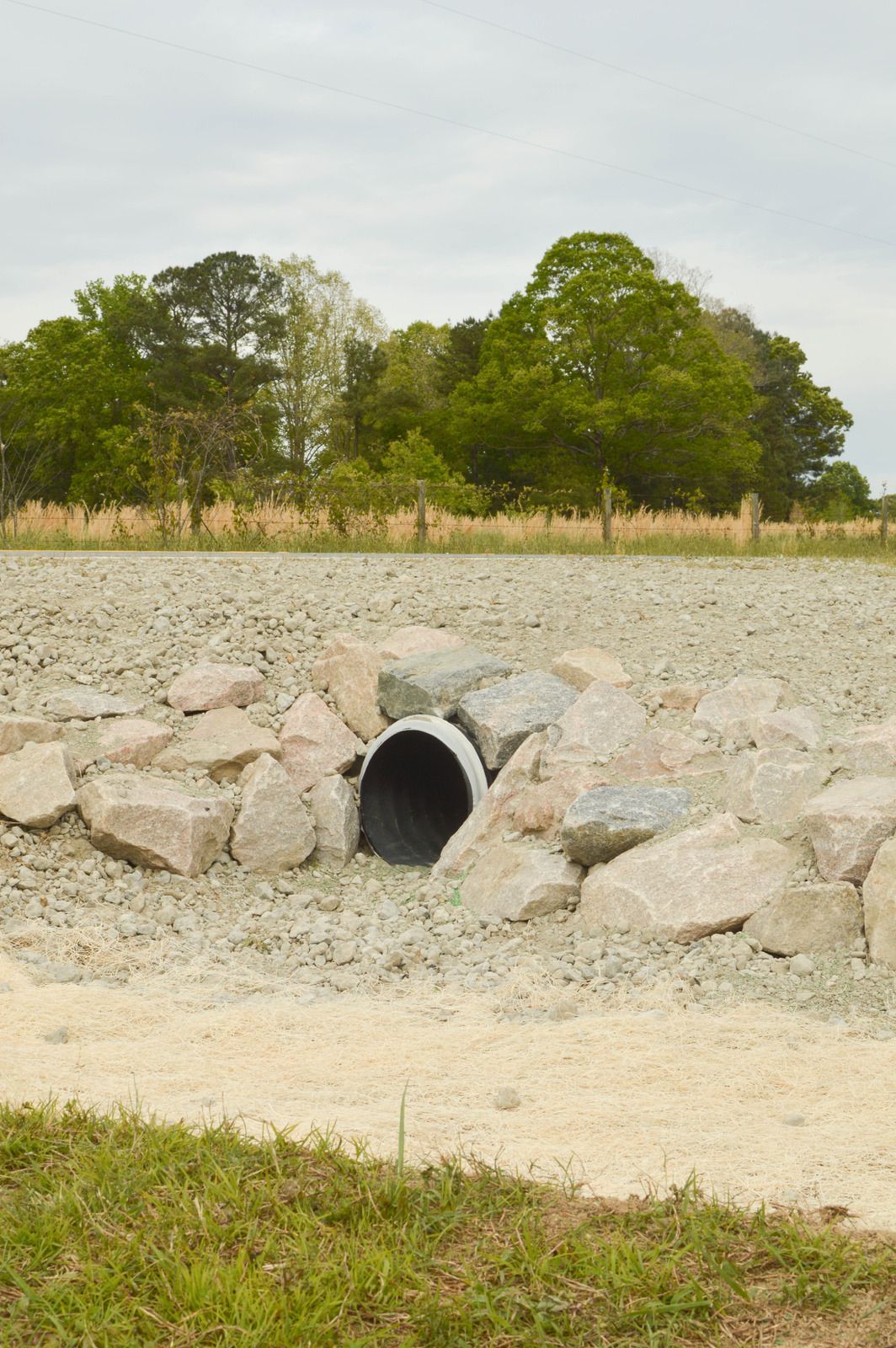
Driveways crossing roadside ditches need pipe large enough to pass storm flow. We set culverts at the correct grade, bed them on compacted material, and build crossings that will not crush the pipe.
Template premium 99
OPEN CHANNELS

Swale Construction & Regrading


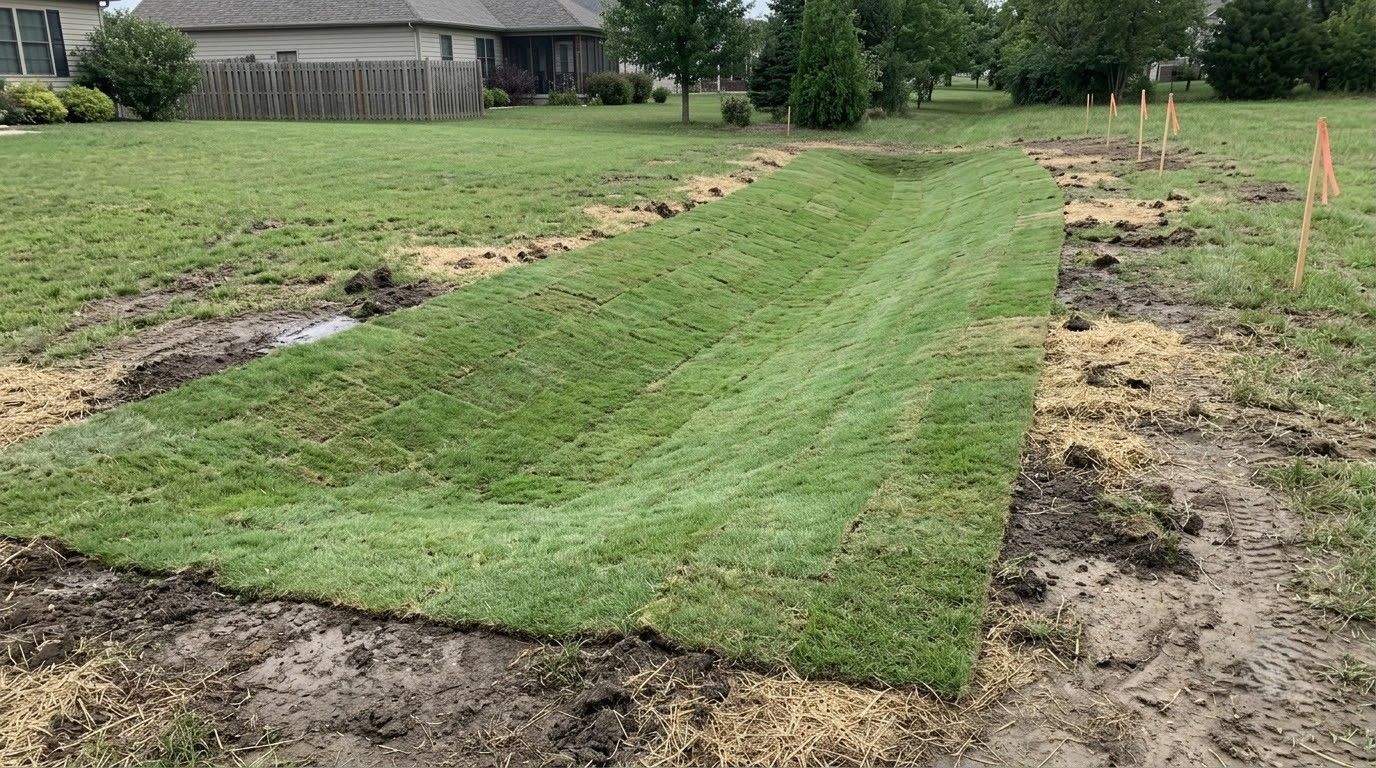
Shallow, grassy channels move surface water across a property without buried pipe. We shape new swales or restore filled-in ones, setting gentle slopes that carry runoff while staying easy to mow.
Template premium 99
LINE REPAIRS

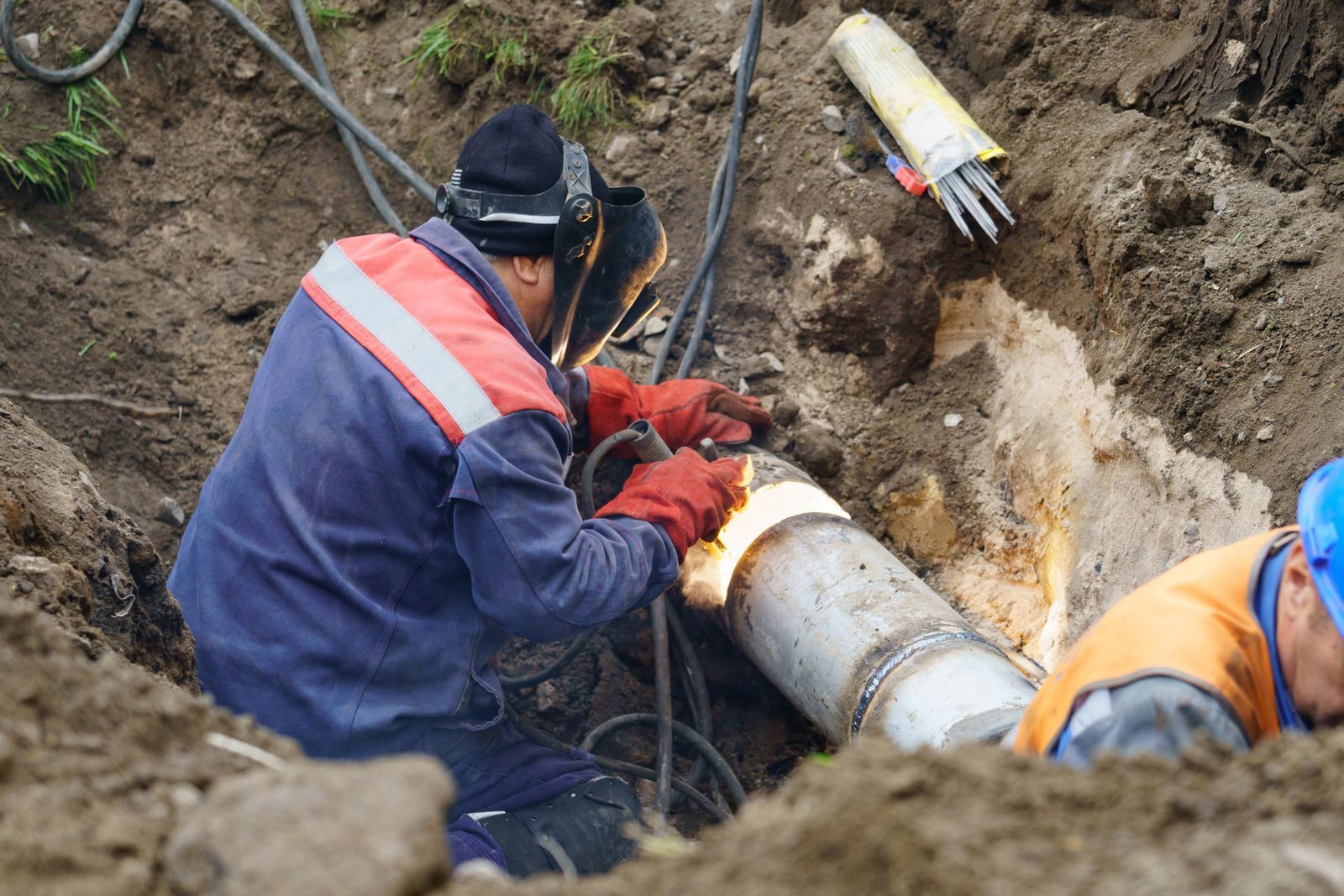
Underground Pipe Repair


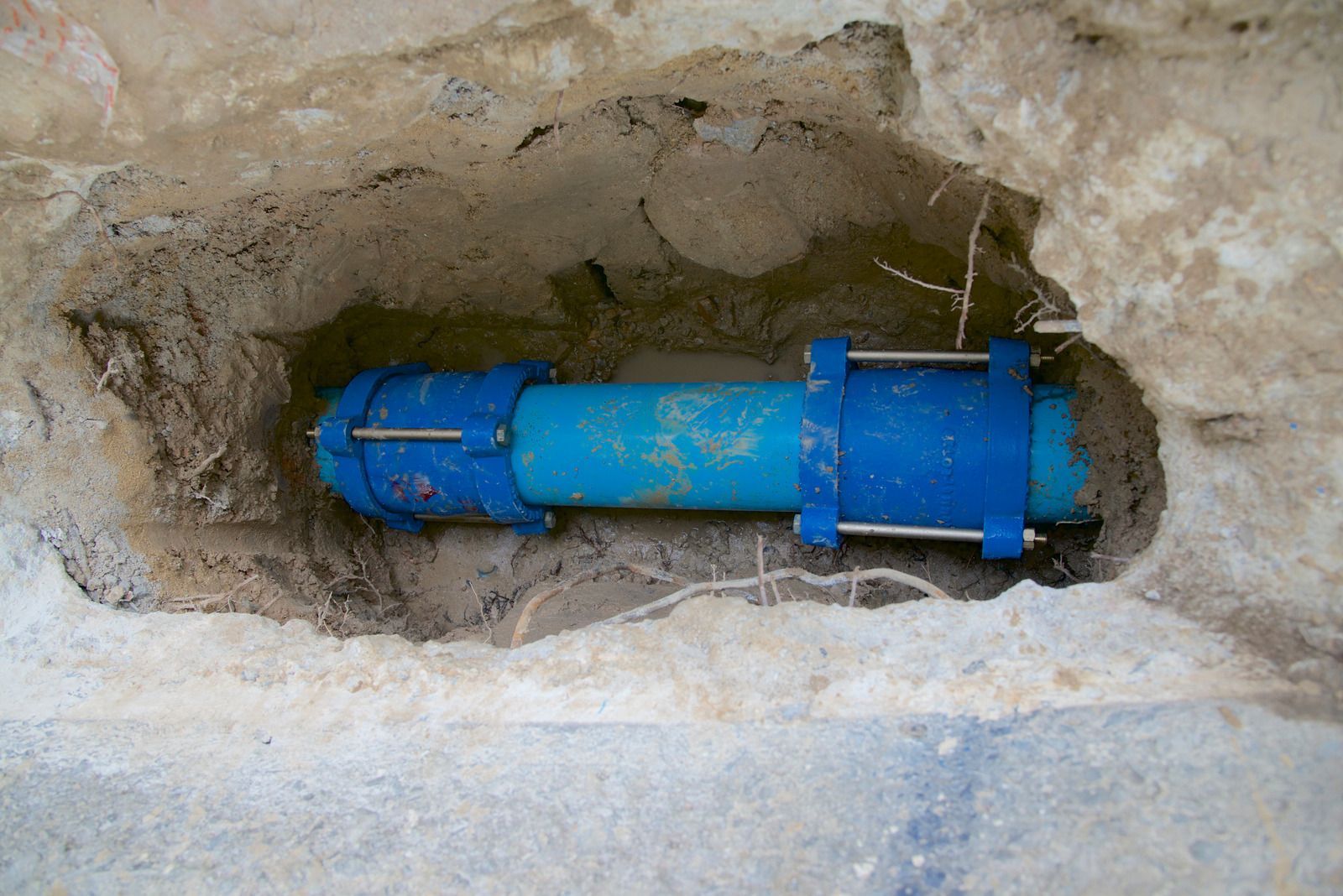
Roots, crushed sections, and sand buildup choke existing lines until water backs up. We locate the failure, excavate carefully, replace damaged pipe, and test the run to confirm steady flow.
Template premium 99
SYSTEM UPGRADES

Drainage System Upgrades


Older systems are often undersized for today's runoff, especially after new pavement or additions. We enlarge or reroute lines and add inlets or outlets so the property handles heavy storms.
Black horizontal line on a white background

THE WORD ON OUR WORK

WHAT OUR CLIENTS SAY.

Homeowners often tell us the first big storm after installation is the moment they relax. Water moves off the yard, slabs stay dry, and driveway edges stop washing out. Read what clients say about the drainage systems our crew has designed and built.

How can I tell if my yard needs a French drain?

Common signs include water that lingers a day or more after rain, soggy turf near the house, and moisture along slab edges. When those persist despite proper grading, a subsurface drain often helps.

Why does sandy soil still flood after heavy rain?

Sand drains quickly only until it fills up. Shallow topsoil, compacted layers, and a high water table limit how much the ground can hold, so intense storms saturate it and leave water on top.

What is the difference between a French drain and a swale?

A French drain is a buried, gravel-wrapped pipe that collects water below the surface. A swale is an open, shallow channel for surface runoff, and many properties benefit from using both together.

Why is filter fabric used around drain pipe?

Fine sand migrates into gravel and pipe perforations over time, gradually clogging the system. Wrapping the trench in filter fabric lets water through while holding sand back, extending the drain's life.

Can I send drainage water onto a neighbor's property?

Generally no, redirecting concentrated runoff onto adjacent land can create liability and code problems. Drainage should discharge to the street, an approved swale, a retention area, or another suitable point.

How often do drainage systems need maintenance?

Clearing grates, inlets, and outlets of leaves and debris a few times a year keeps most systems working. A yearly check after the rainy season catches sand buildup or root intrusion before backups.

Can drainage be added when paving a driveway in Jacksonville, Florida?

That is actually the ideal time. Richard Cooper's All Around Asphalt can pair paving with French drains, culverts, or regrading in Jacksonville, Florida, since handling water during construction costs far less.

Why choose Richard Cooper's All Around Asphalt for drainage in Jacksonville, Florida?

Richard Cooper's All Around Asphalt traces how water really moves before designing anything, then builds with filter fabric, proper falls, and legal outlets. Jacksonville, Florida properties get systems that last.

Black horizontal rounded line on a white background

Common Questions

FREQUENTLY ASKED QUESTIONS.

Drainage problems can be confusing, especially on sandy Florida soil. These answers explain the most common questions property owners ask before we design a system for their land.

How can I tell if my yard needs a French drain?

Common signs include water that lingers a day or more after rain, soggy turf near the house, and moisture along slab edges. When those persist despite proper grading, a subsurface drain often helps.

Why does sandy soil still flood after heavy rain?

Sand drains quickly only until it fills up. Shallow topsoil, compacted layers, and a high water table limit how much the ground can hold, so intense storms saturate it and leave water on top.

What is the difference between a French drain and a swale?

A French drain is a buried, gravel-wrapped pipe that collects water below the surface. A swale is an open, shallow channel for surface runoff, and many properties benefit from using both together.

Why is filter fabric used around drain pipe?

Fine sand migrates into gravel and pipe perforations over time, gradually clogging the system. Wrapping the trench in filter fabric lets water through while holding sand back, extending the drain's life.

Can I send drainage water onto a neighbor's property?

Generally no, redirecting concentrated runoff onto adjacent land can create liability and code problems. Drainage should discharge to the street, an approved swale, a retention area, or another suitable point.

How often do drainage systems need maintenance?

Clearing grates, inlets, and outlets of leaves and debris a few times a year keeps most systems working. A yearly check after the rainy season catches sand buildup or root intrusion before backups.

Can drainage be added when paving a driveway in Jacksonville, Florida?

That is actually the ideal time. Richard Cooper's All Around Asphalt can pair paving with French drains, culverts, or regrading in Jacksonville, Florida, since handling water during construction costs far less.

Why choose Richard Cooper's All Around Asphalt for drainage in Jacksonville, Florida?

Richard Cooper's All Around Asphalt traces how water really moves before designing anything, then builds with filter fabric, proper falls, and legal outlets. Jacksonville, Florida properties get systems that last.

    Black horizontal rounded line on a white background
    HOW WE WORK

    FROM SOGGY GROUND TO DRY LAND, HERE IS HOW.

    STEP 01

    Walk the Problem Areas
    We visit the property, ideally soon after rain, to see where water collects and how it moves. You point out trouble spots, and we look for hidden causes you may not notice yourself day to day.

    STEP 02

    Measure Falls and Outlets
    Elevations tell us where water can flow by gravity and where it can legally discharge. We check the street, swales, and retention areas to find the best available outlet for your new system.

    STEP 03

    Design the System
    Based on what we find, we recommend French drains, catch basins, swales, culverts, or a combination. You get a clear explanation of each part and why it belongs in the final plan for your property.

    STEP 04

    Locate Utilities and Dig
    After Sunshine 811 marks underground lines, we excavate trenches and inlet locations carefully. Spoils are kept tidy and lawns are protected as much as possible while the drainage work is underway on site.

    STEP 05

    Install and Backfill
    Pipe goes in at a steady fall, wrapped in filter fabric and bedded in gravel. Inlets and outlets are connected, then trenches are backfilled and compacted so the surface settles evenly without dips or soft spots.

    STEP 06

    Test and Restore
    We run water through the system to confirm steady flow, then restore the surface and clean the site. You also get simple maintenance tips to keep grates and outlets clear through every rainy season.